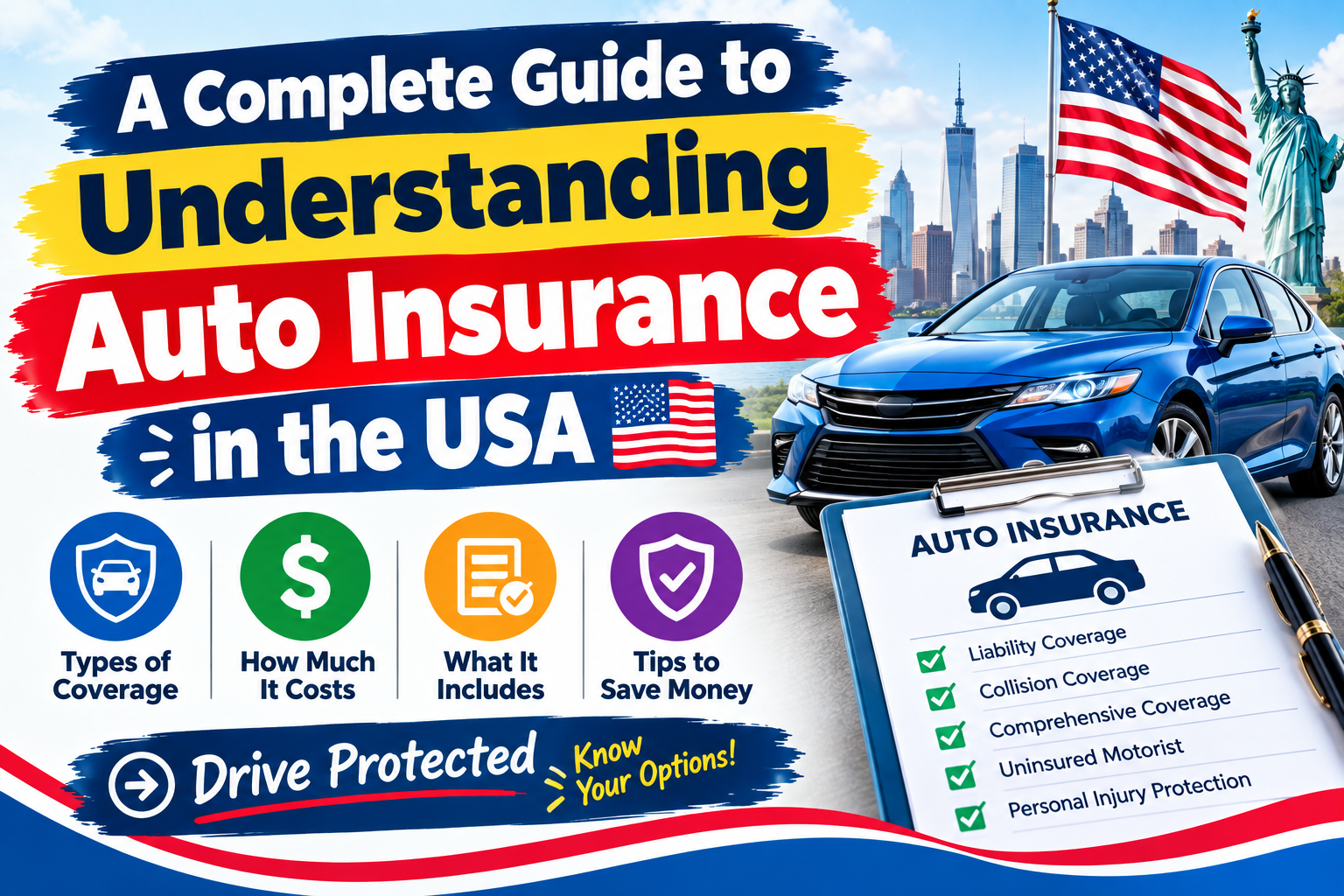
A Complete Guide to Understanding Auto Insurance in the USA
One essential component of owning and driving a car in the US is having auto insurance. It ensures that drivers are not left with crippling costs by offering financial protection against theft, accidents, and other unanticipated circumstances. It might be difficult to comprehend auto insurance in the USA due to the wide range of state laws, coverage options, and insurance companies. The purpose of this page is to make the subject easier to understand and give a concise synopsis of auto insurance’s functions, significance, and advice for selecting the best plan.
Why Auto Insurance Is Required in the United States
Nearly all states in the US have laws requiring auto insurance.
The protection of all parties involved in an accident is the main justification for this requirement. Drivers who cause accidents without insurance may not be able to pay for the damages or medical bills, leaving victims in a precarious financial situation. By guaranteeing that these expenses are met, auto insurance lessens the strain on both people and the healthcare system.
Liability insurance is usually one of the minimum coverage requirements specified by each state. Damages and injuries to third parties in an accident where the policyholder is at fault are covered by liability insurance. Certain states also mandate extra coverage, such uninsured/underinsured motorist coverage or personal injury protection (PIP).
Types of Coverage for Auto Insurance
A variety of coverage options are available under US auto insurance policies to accommodate varying needs.
The most prevalent kinds are as follows:
The simplest and most essential type of auto insurance is liability coverage.
- In an accident where the policyholder is at fault, it covers other people’s property damage and bodily injuries. Vehicle damage and the policyholder’s personal injuries are not covered.
- accident Coverage: Regardless of who is at fault, this covers the policyholder’s vehicle’s replacement or repair in the event of an accident.
- Comprehensive Coverage: This offers protection against events other than collisions, like theft, vandalism, natural disasters, and collisions with animals.
- Personal Injury Protection (PIP): Also referred to as no-fault insurance, PIP protects the policyholder and passengers against medical bills, lost income, and other expenditures, regardless of who was at fault in the collision.
- Gap insurance protects consumers who are leasing or financing a car by paying the difference between the car’s value and the loan balance in the event that the vehicle is stolen or totalled.
Also read: Join tiktok creativity
Factors Influencing the Cost of Auto Insurance:
- Premiums for auto insurance vary greatly depending on a number of criteria. Drivers can reduce their expenses by being aware of these:
- Driving History: Lower premiums are usually the consequence of a spotless driving history free of collisions or moving infractions.
- Age and Gender: Due to their inexperience, younger drivers—especially teenagers—frequently have higher rates. statistically.
- Location: Compared to rural locations, insurance prices are typically higher in urban areas with higher traffic densities and crime rates.
- Vehicle Type: Because they require more repairs or replacements, expensive, high-performance, or luxury cars have higher insurance premiums.
- Credit Score: To determine risk, insurers in the majority of states utilise credit scores. Lower rates may result from a higher credit score.
- Deductibles and Coverage Limits: While lower deductibles and greater limits result in lower premiums, larger deductibles and lower coverage limits result in higher premiums.
Advice on Selecting the Best Auto Insurance
Compare the following quotes: To obtain the greatest prices and coverage options, get quotes from several insurance companies.
Evaluate Your Needs: To choose the right amount of coverage, take your driving style, car type, and financial status into account.
Seek Discounts: A lot of insurance companies provide discounts for installing anti-theft devices, bundling policies, driving safely, and being a good-score student.
Read Reviews: To evaluate the dependability and customer support of possible insurers, look up customer reviews and ratings.
Evaluate Your Policy Every Year: Make sure your policy still suits your needs and take advantage of any new reductions or modifications to your situation by reviewing it on a regular basis.
In conclusion
In the USA, having auto insurance is essential to prudent car ownership. It offers financial stability and peace of mind in addition to meeting legal requirements. Drivers can make well-informed decisions that safeguard both themselves and other road users by being aware of the different kinds of coverage that are available, the variables that affect rates, and how to select the best policy. Taking the time to assess your needs for auto insurance is a wise investment in your financial security and safety, regardless of your level of driving experience.